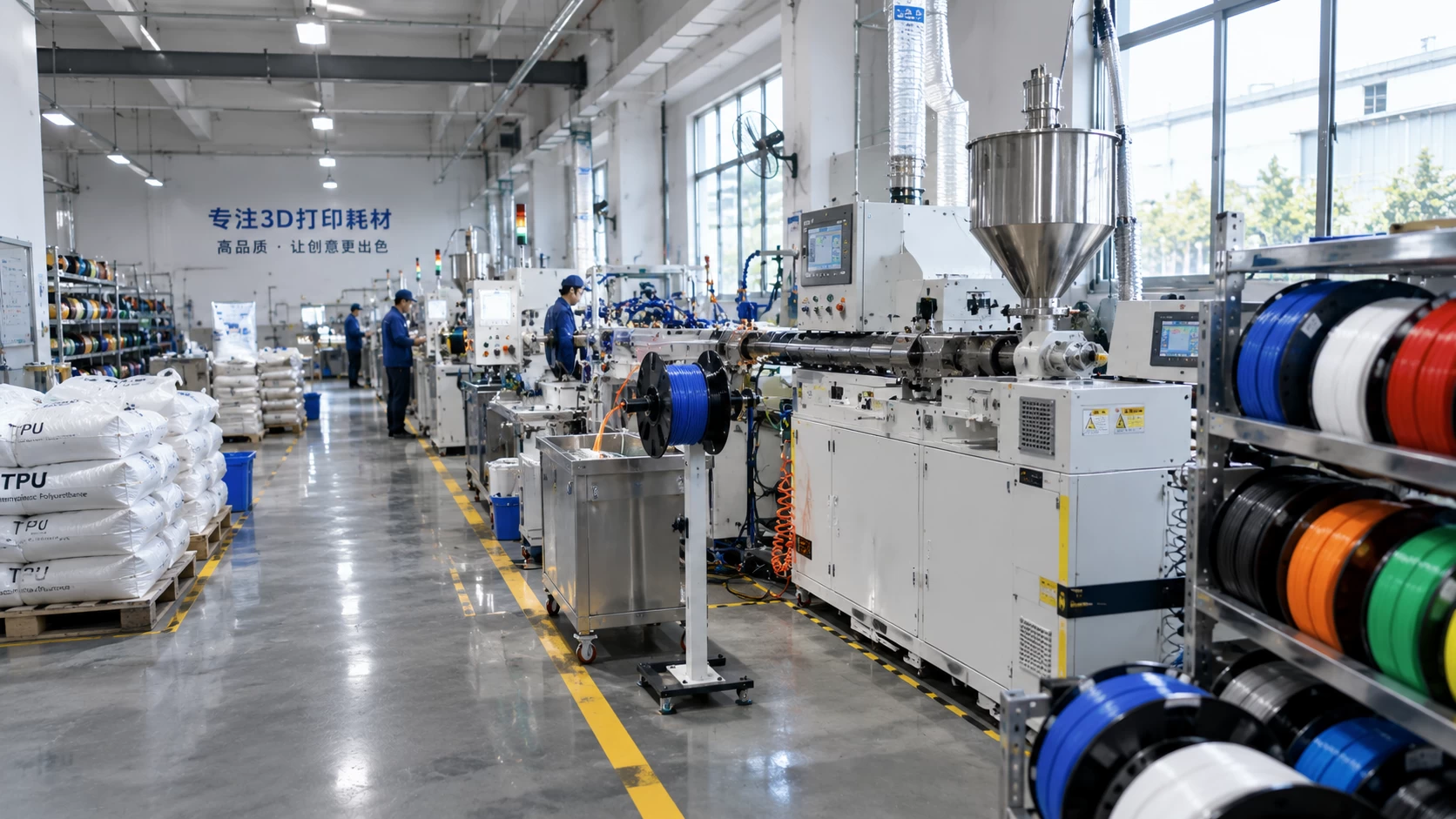
A practical packaging checklist for private-label filament projects, from spool format and desiccant to labels and carton planning.
News & Insights
Application notes, material updates, and technical insights from our engineering team.
How to compare filament technical data sheets without treating headline numbers as universal print settings.
A practical checklist for units, geometry, orientation, material and quantity before requesting a 3D printing quote.
A practical OEM filament checklist: define the scope, request the right samples, verify batch consistency and documentation, and compare private label with custom formulation.
Why a food-approved resin does not make a printed part food-safe, and the hardware and design measures that reduce the risk.
Practical methods for drying filament without a dedicated dryer, including the risks of household ovens and why desiccant alone does not dry anything.
A practical way to pick a filament dryer: required temperature range, chamber capacity, seal quality and what a dryer cannot fix.
Which filament families suit the open-frame A1 series and the enclosed P1S, and why standard AMS units are not built for soft TPU.
TCT Shenzhen 2026 runs Oct 14–16 at Shenzhen World Exhibition & Convention Center. Explore desktop 3D printing, polymers, and hardware innovation. Claim free tickets by Oct 13, 12:00 PM!
PLA prints easily, but temperature and speed still need to match. Too hot and the details soften; too fast and the extruder cannot keep up.
PETG stringing is usually a balance problem: too much heat, too much ooze and a travel move that gives the filament time to escape. Fix the easy variables first, then tune retracti
Filament storage is not only about keeping spools tidy. Moisture changes extrusion, surface quality and layer strength, especially with nylon, TPU and PETG.