
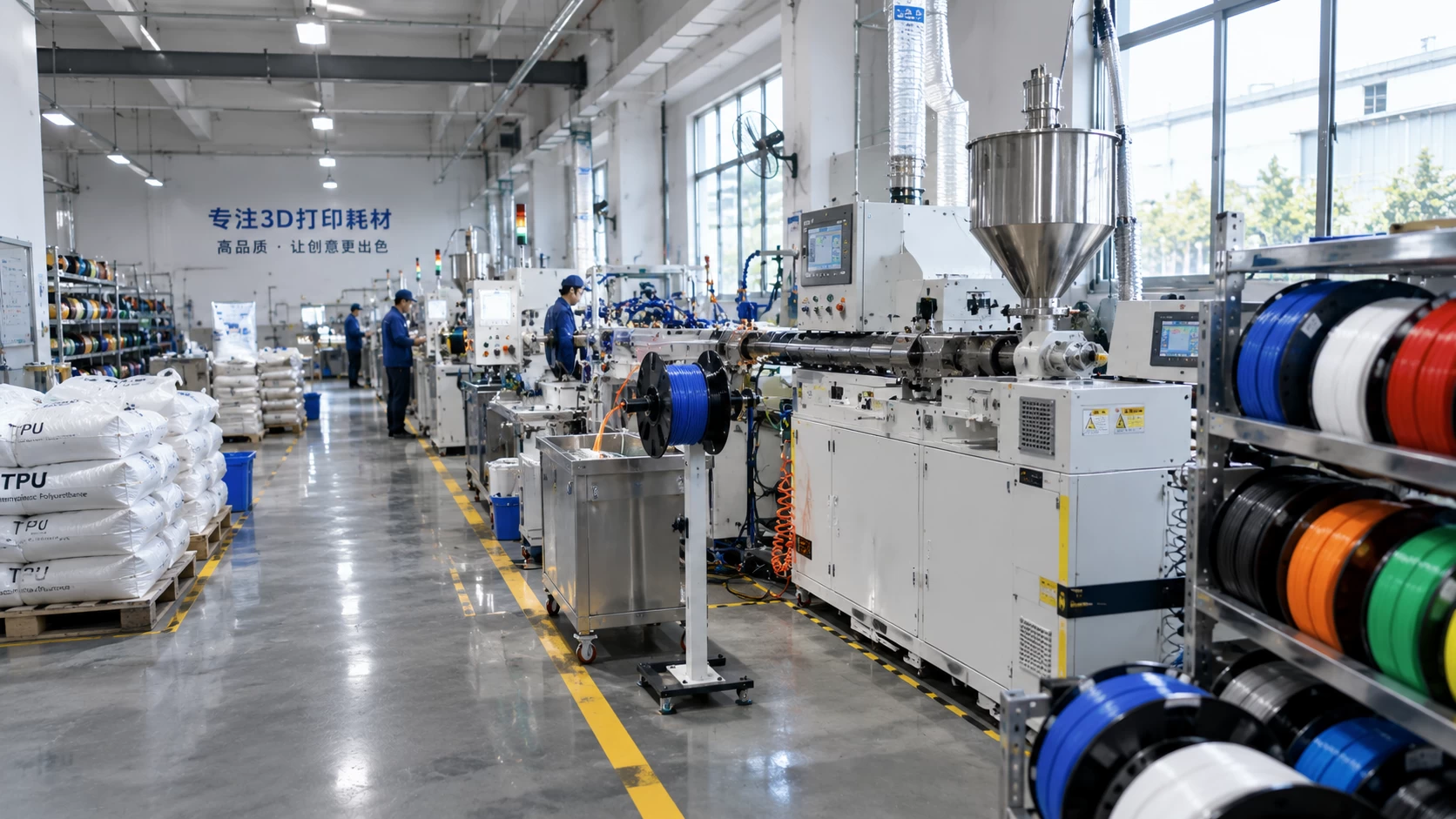
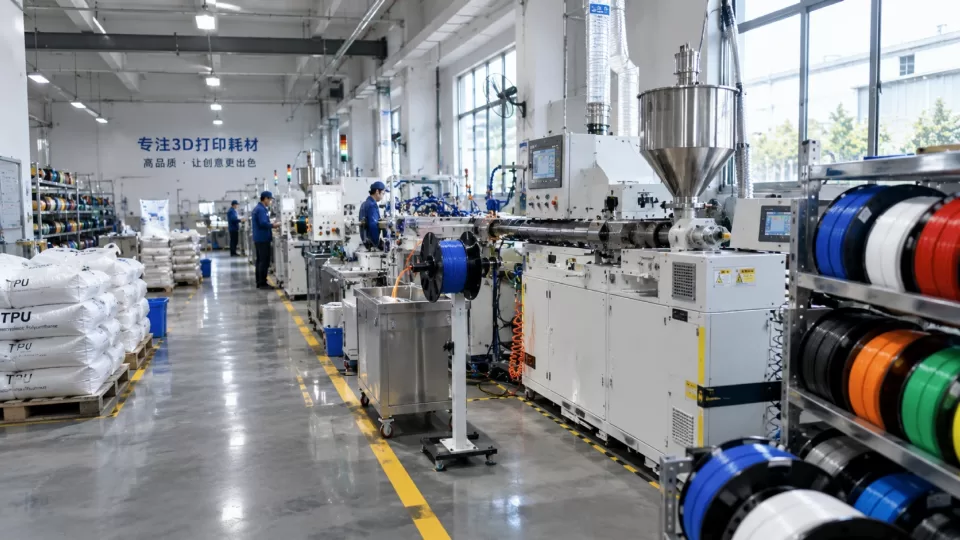
FILAMENTLAB receives frequent questions about which 3D-printing filament to choose. Search interest in filament types, material comparisons and heat-resistant options is strong, but the correct choice depends on the part, printer and operating conditions rather than a single “best” material.
For distributors and workshops in Kenya and East Africa, confirm humidity-control, spare-part and delivery requirements before specifying a material.
Start with the application
- PLA: easy to print and dimensionally stable for visual models, jigs and low-temperature prototypes; it is not the default choice for hot or heavily loaded parts.
- PETG: a useful balance of toughness and printability for brackets, guards and general industrial parts.
- TPU: suitable for flexible grips, seals and impact protection; slow printing and moisture control are usually more important than with rigid polymers.
- ABS and ASA: used where impact resistance or outdoor exposure matters; warping and ventilation requirements need to be managed.
- PA and PC: engineering options for demanding mechanical or thermal requirements, with drying and printer capability becoming critical.
- CF and GF grades: add stiffness but are abrasive and normally require a hardened nozzle; properties remain direction-dependent.
Verify before ordering
Check the TDS for grade, diameter and tolerance, recommended print range, drying conditions, packaging and available compliance documents. Confirm that the printer, nozzle, bed and enclosure match the material. For production parts, approve a sample using the intended print orientation and then record the batch and process settings.