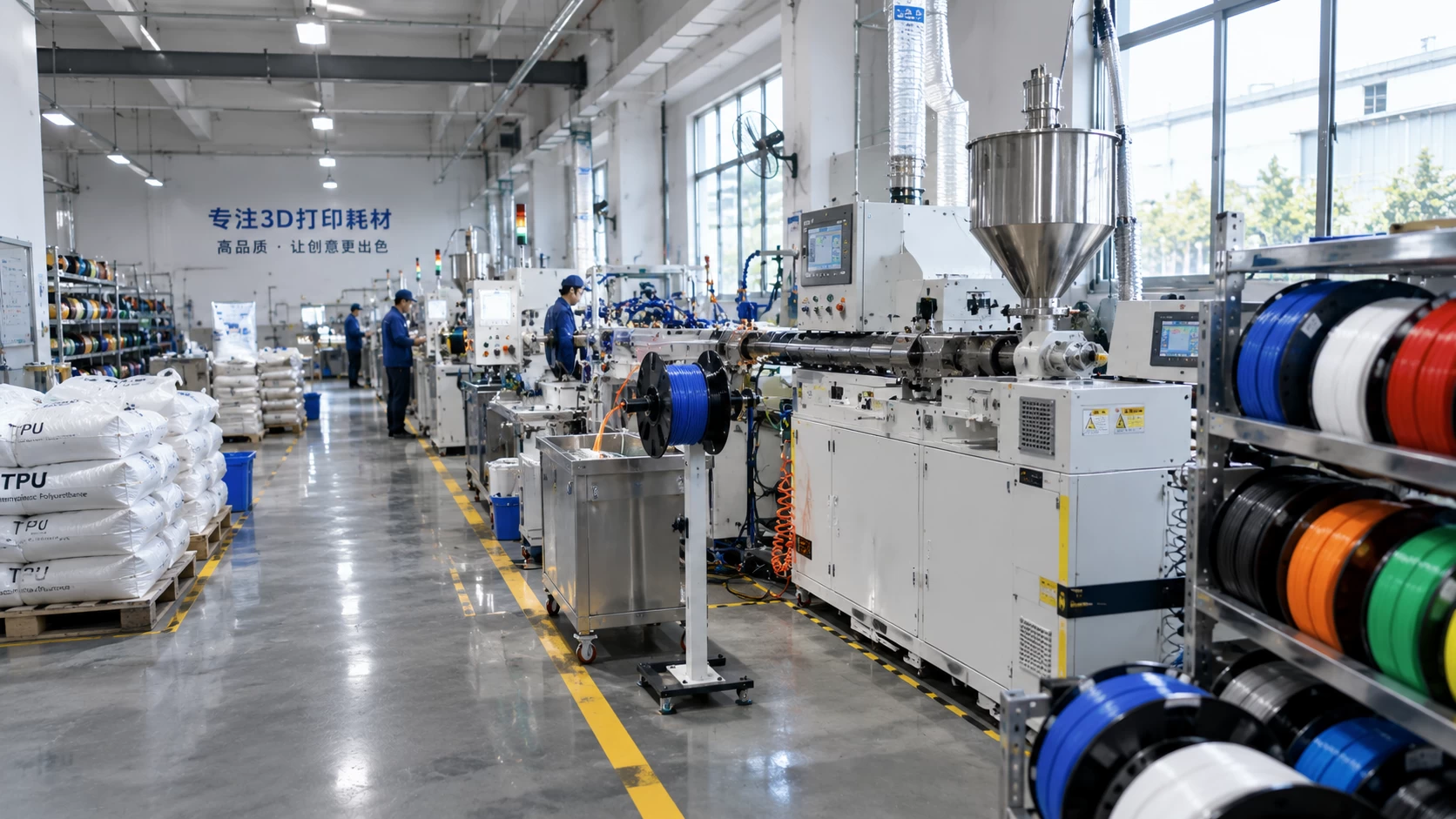
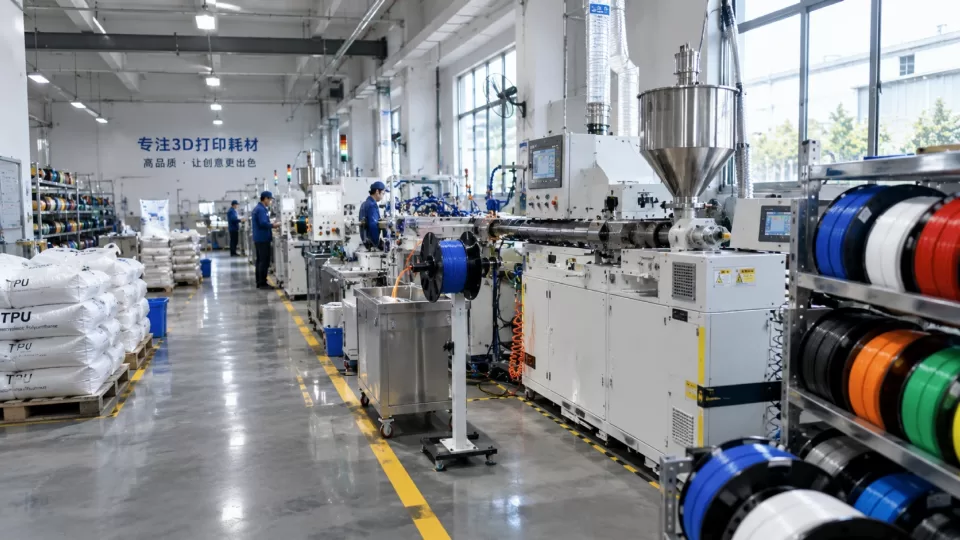
OEM filament sourcing is often described as putting a buyer's logo on an existing spool. In practice, the commercial and technical scope can be much wider: a private label program, a custom color or spool, a modified formulation, or a full ODM project. The earlier those boundaries are defined, the easier it is to compare quotes and avoid a costly pilot.
Define the OEM scope before asking for a price
Start with four questions. Is the supplier supplying an existing material under the buyer's brand, or developing a new formulation? Who owns the formulation and the test data? Who is responsible for labeling, packaging and market compliance? What must remain unchanged between the sample and mass production? A clear answer to these questions prevents a low quote from hiding a different scope.
What belongs in the RFQ
A useful RFQ is specific enough to compare suppliers on the same basis. Include the polymer family and grade, diameter and tolerance, spool weight and material, color target, sample quantity, expected monthly volume, packaging and labeling requirements, destination market, required documents and Incoterms. If a parameter is unknown, mark it as open rather than letting each supplier fill it with a different assumption.
| RFQ item | Why it matters |
|---|---|
| Polymer family and grade | Prevents comparing PLA with a different engineering grade. |
| Diameter and tolerance | Affects feed reliability and print consistency. |
| Spool size and material | Changes packaging, freight and printer compatibility. |
| Color target | Masterbatch and approval method affect MOQ and lead time. |
| Sample and test plan | Defines the acceptance criteria before mass production. |
| Packaging and labeling | Private-label requirements are often underestimated. |
| Destination market and documents | Determines which compliance files are needed. |
| Incoterms and forecast | Makes landed cost and capacity comparable. |
Material and batch consistency
Ask for the TDS and a COA for the actual lot, not only a generic brochure. Confirm how diameter, ovality, moisture and key mechanical properties are controlled, and how lots are traced. Print a representative sample with your own geometry and profile, then repeat the test on a second lot. A single good spool is not evidence of batch consistency.
Documentation and compliance
Documentation requirements depend on the market and application. Common requests include TDS, SDS, COA, RoHS/REACH declarations and, where relevant, UL or other approvals. Do not assume a document exists because a material is described as industrial or engineering. Ask for the exact document, revision and scope. Also remember that a material approval does not certify the printed part; the finished part may need separate testing.
Private label vs custom formulation
Private label is usually faster and lower risk because the material is already established. Custom formulation offers differentiation but requires more testing, longer timelines and a clear change-control process. Discuss exclusivity, minimum volume, tooling or spool ownership, and what happens if the formulation changes. Put the commercial terms and the technical acceptance criteria in writing.
How to compare suppliers
Compare more than price per kilogram. Look at sample turnaround, willingness to share test data, batch traceability, packaging quality, communication during the pilot and the process for handling a non-conformance. A supplier that cannot explain its change control is a supply risk, even if the first sample prints well.
Frequently asked questions
What is a typical MOQ? It depends on material, color, spool and packaging. Ask for MOQ by SKU and by total order; do not compare a private-label MOQ with a custom-formulation MOQ.
Can I request a sample? Yes, but define the sample quantity, the test profile and the acceptance criteria first. A sample without a test plan only confirms that the spool prints.
What is the difference between OEM and ODM? In OEM, the buyer typically controls the brand and specification; in ODM, the supplier contributes more of the design and formulation. Confirm who owns the specification and the documentation.
How long does an OEM project take? A private-label order can move faster than a custom formulation. The timeline depends on sample iterations, packaging, documentation and production scheduling; ask for a milestone plan rather than a single lead-time number.
Start with the OEM filament page, review the material range, or send your specification through RFQ. Technical documents can be requested from the TDS page.